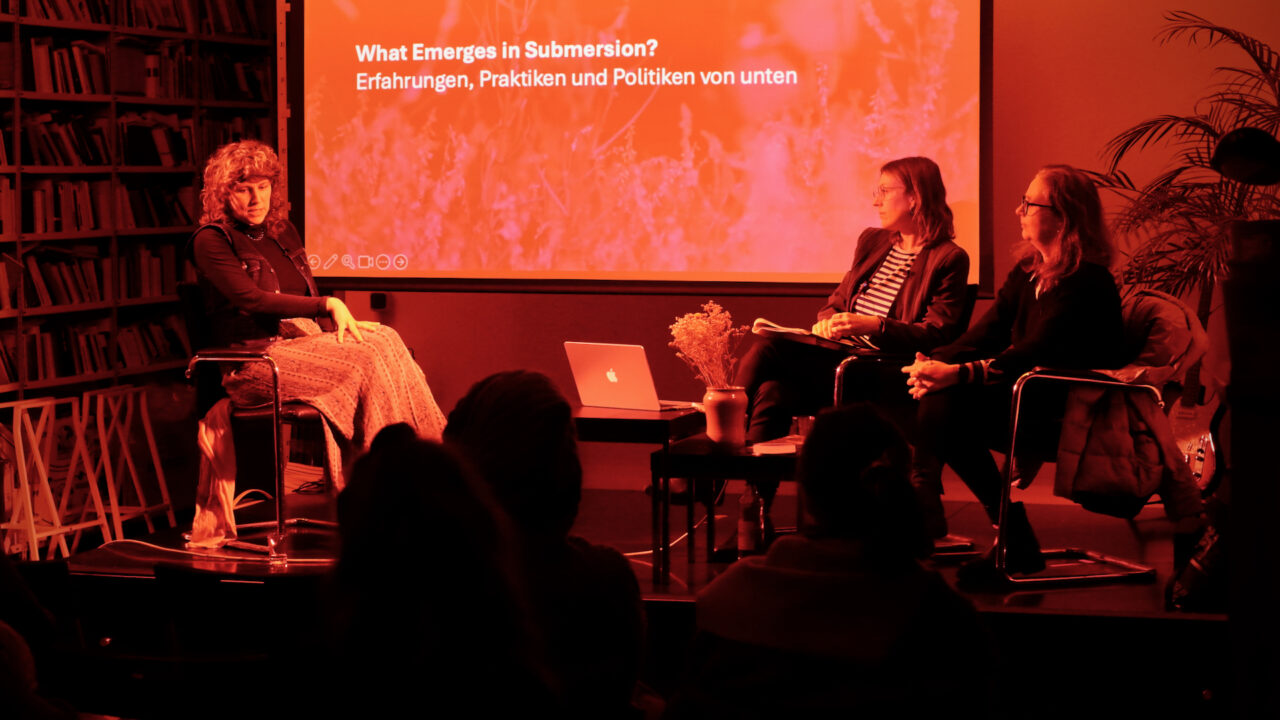
What Emerges in Submersion? ❘ Erfahrungen, Praktiken und Politiken von unten
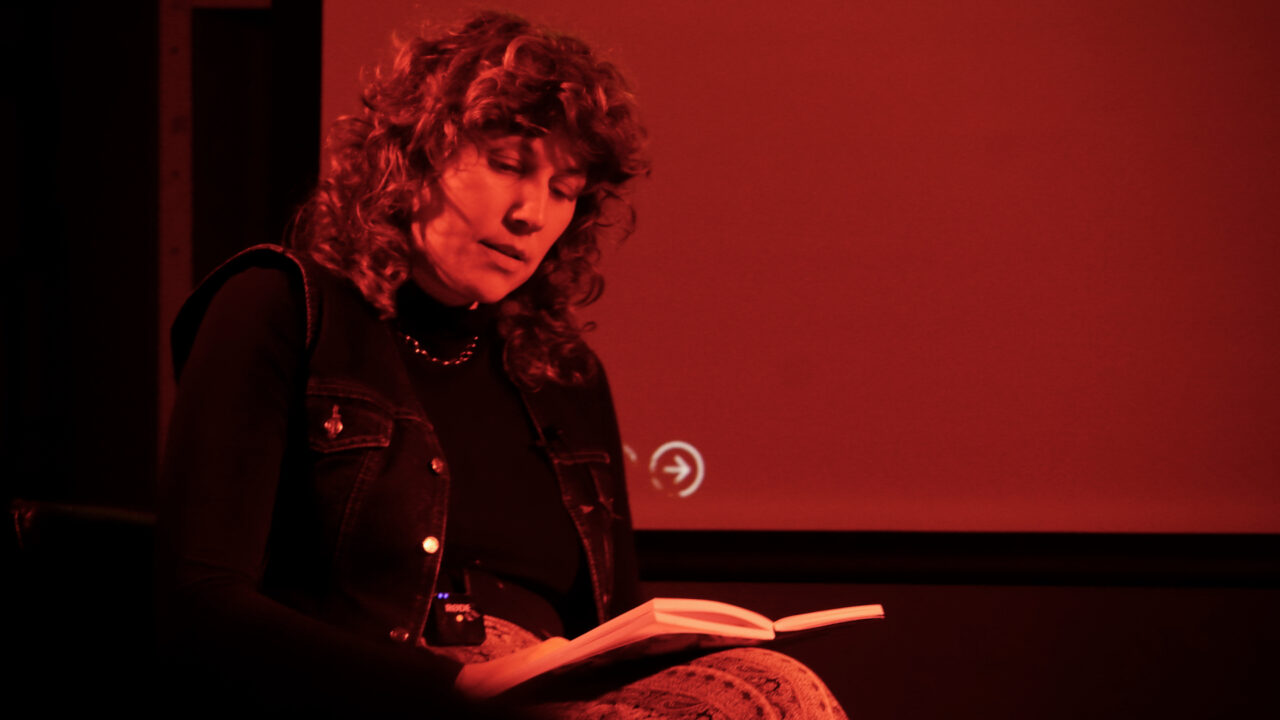
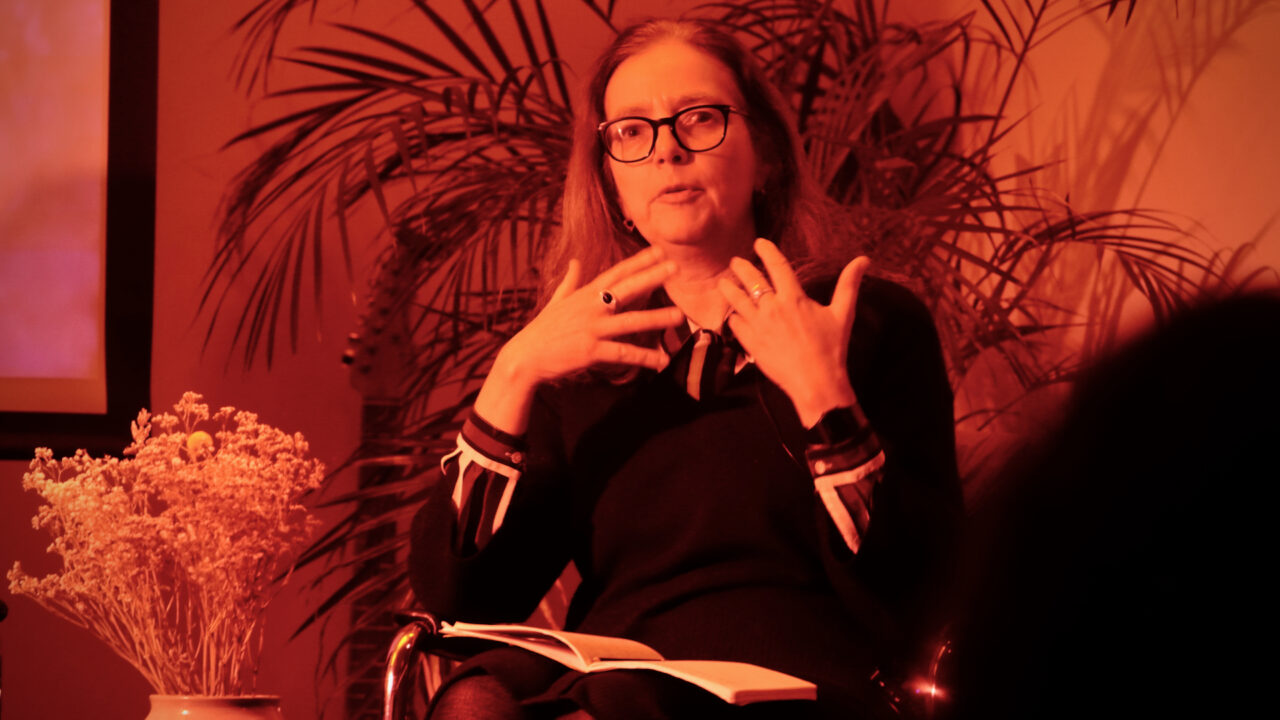
Film, Lesung und Gespräch mit
Marie Sophie Beckmann| Petra Löffler | Amelie Wedel
Die Veranstaltungssprache findet auf Deutsch statt, es werden jedoch Passagen aus englischsprachigen Texten gelesen.
Ob als Ozean, Erdreich oder Boden, als metaphorische oder symbolische Unterwelt oder als politische Denkfigur: Das Untergründige ist zu einem zentralen Bezugspunkt in aktuellen Debatten über ökologische, soziale und postkoloniale Konflikte sowie Machtasymmetrien in den Geisteswissenschaften und darüber hinaus geworden. Sich dem Untergrund zuzuwenden, ist jedoch niemals nur eine thematische Setzung. Es impliziert eine konzeptuelle und methodologische Bewegung – eine Praxis des Untertauchens –, die eine kritische Reflexion der Bedingungen, Technologien, Ästhetiken und Politiken der Wissensproduktion erfordert.
In The Extractive Zone (2017) prägte Macarena Gómez-Barris den Begriff der „submerged modes“, um komplexe und widerständige Formen von Leben und Wissen zu beschreiben. Diese sozialen Ökologien sind in spezifische materielle und mediale Umgebungen eingebettet – geprägt von industrieller und digital-kapitalistischer sowie neokolonialer Ausbeutung, Enteignung und Überwachung –, während sie diesen Machtverhältnissen zugleich widerstehen. Aufgrund ihrer immateriellen Dichte und illegiblen Heterogenität entziehen sich solche Perspektiven einem „extraktiven Blick“ von oben: Erkenntnisweisen, die auf totalisierende Repräsentation, (wissenschaftliche) Disziplinierung und kapitalistische Verwertung zielen. Stattdessen fordern sie Methoden und Perspektiven, die selbst untergetaucht sind – eine Wahrnehmung von unten.
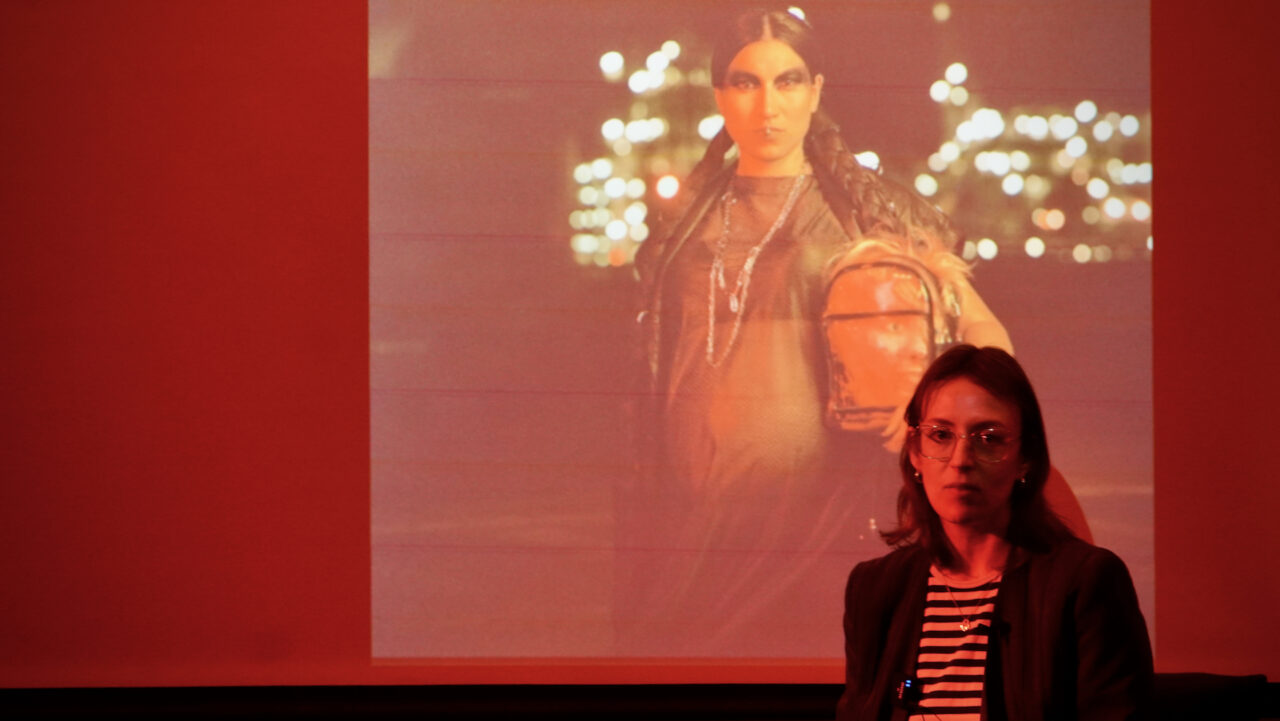
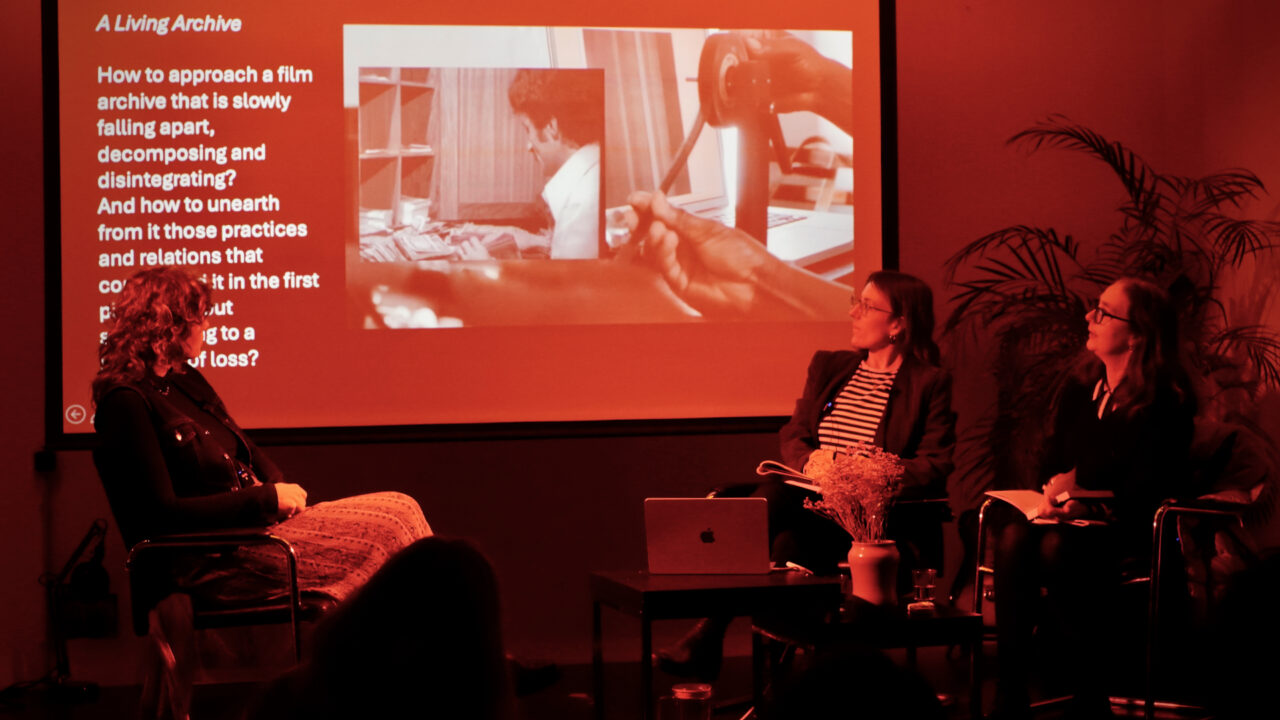
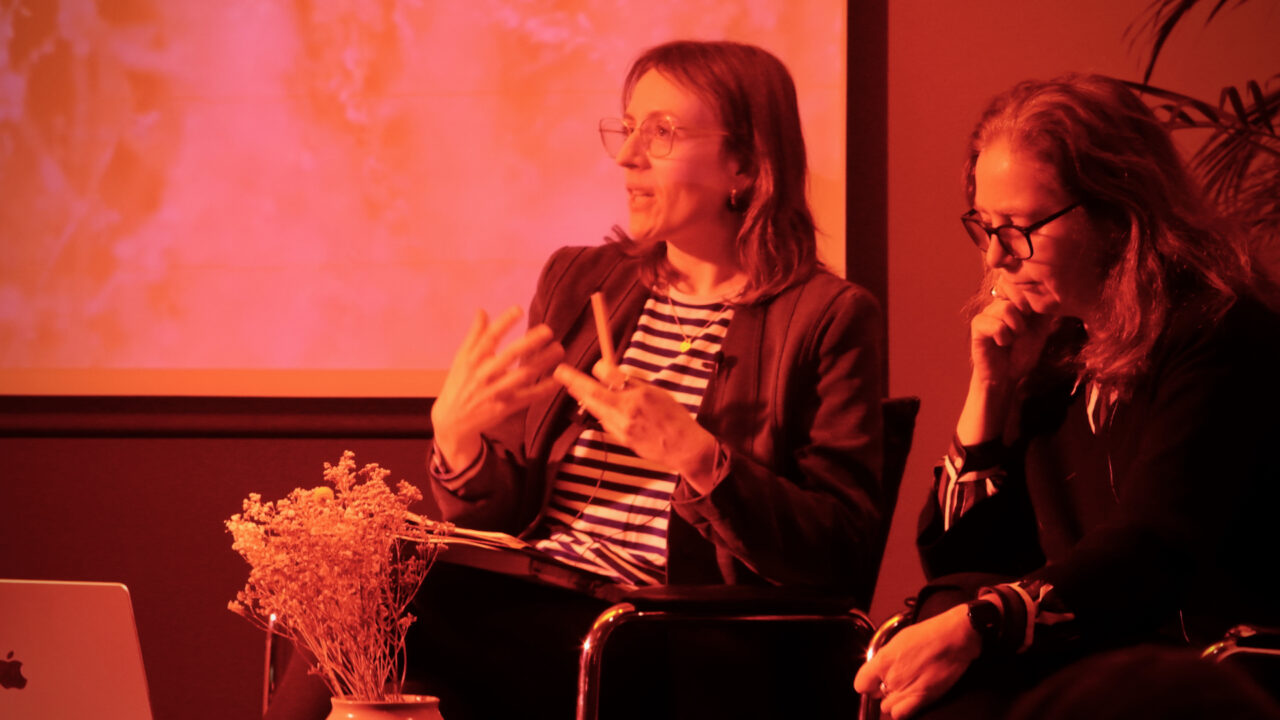
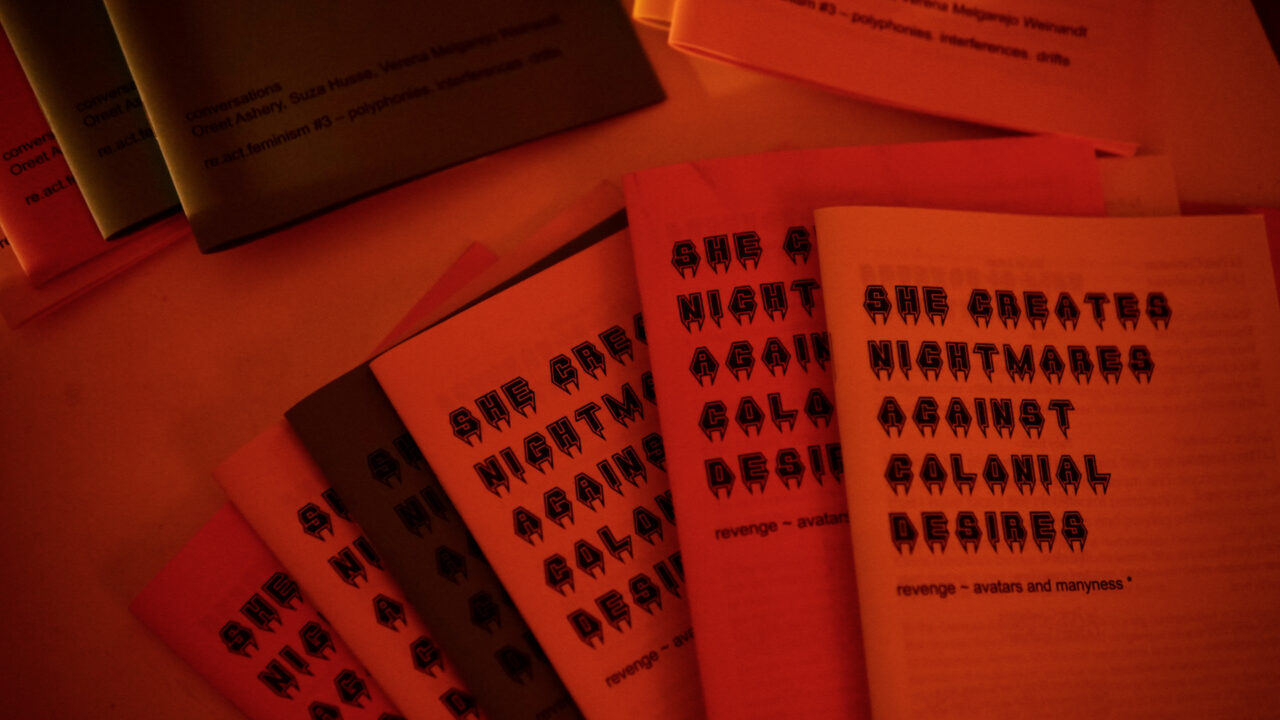
Ausgehend von Gómez-Barris‘ Konzept und durch eine leichte terminologische Verschiebung diskutieren Marie Sophie Beckmann, Petra Löffler und Amelie Wedel das kritische Potenzial von sub(e)merging im Dialog mit zeitgenössischen Film- und Videoarbeiten (unter anderem mit dem Film: Invocation, Connecting in Darkness (2022) von Verena Melgarejo Weinandt). Welche Herausforderungen stellt sub(e)merging für dominante Modi der Repräsentation dar? Wie kann das Unter-die-Oberfläche-Gehen zu einer Position werden, von der aus sich Wahrnehmung, Sprechen und Handeln anders organisieren lassen? Und inwiefern destabilisiert sub(e)merging den Boden selbst als Ort von Evidenz und Wissensproduktion?
Über uns
Die Veranstaltungssprache findet auf Deutsch statt, es werden jedoch Passagen aus englischsprachigen Texten gelesen.
Ob als Ozean, Erdreich oder Boden, als metaphorische oder symbolische Unterwelt oder als politische Denkfigur: Das Untergründige ist zu einem zentralen Bezugspunkt in aktuellen Debatten über ökologische, soziale und postkoloniale Konflikte sowie Machtasymmetrien in den Geisteswissenschaften und darüber hinaus geworden. Sich dem Untergrund zuzuwenden, ist jedoch niemals nur eine thematische Setzung. Es impliziert eine konzeptuelle und methodologische Bewegung – eine Praxis des Untertauchens –, die eine kritische Reflexion der Bedingungen, Technologien, Ästhetiken und Politiken der Wissensproduktion erfordert.
In The Extractive Zone (2017) prägte Macarena Gómez-Barris den Begriff der „submerged modes“, um komplexe und widerständige Formen von Leben und Wissen zu beschreiben. Diese sozialen Ökologien sind in spezifische materielle und mediale Umgebungen eingebettet – geprägt von industrieller und digital-kapitalistischer sowie neokolonialer Ausbeutung, Enteignung und Überwachung –, während sie diesen Machtverhältnissen zugleich widerstehen. Aufgrund ihrer immateriellen Dichte und illegiblen Heterogenität entziehen sich solche Perspektiven einem „extraktiven Blick“ von oben: Erkenntnisweisen, die auf totalisierende Repräsentation, (wissenschaftliche) Disziplinierung und kapitalistische Verwertung zielen. Stattdessen fordern sie Methoden und Perspektiven, die selbst untergetaucht sind – eine Wahrnehmung von unten.
Ausgehend von Gómez-Barris‘ Konzept und durch eine leichte terminologische Verschiebung diskutieren Marie Sophie Beckmann, Petra Löffler und Amelie Wedel das kritische Potenzial von sub(e)merging im Dialog mit zeitgenössischen Film- und Videoarbeiten (unter anderem mit dem Film: Invocation, Connecting in Darkness (2022) von Verena Melgarejo Weinandt). Welche Herausforderungen stellt sub(e)merging für dominante Modi der Repräsentation dar? Wie kann das Unter-die-Oberfläche-Gehen zu einer Position werden, von der aus sich Wahrnehmung, Sprechen und Handeln anders organisieren lassen? Und inwiefern destabilisiert sub(e)merging den Boden selbst als Ort von Evidenz und Wissensproduktion?

